Magic the Gathering History
Magic the Gathering is a trading card game created by Wizards of the Coast all the way back in 1993.
It uses a five-color system of mana, with which you play the cards in your hand, casting them.
Since its release,
new expansions have been releasing, expanding the universe of Magic with over tens of thousands of unique cards
across many different sets throughout the years.
Basics of How-To-Play
Magic the Gathering has many different formats, all of which can play differently.
In Standard, you face off against one opponent in a one-on-one match.
You each will have 60 cards in your deck, which may fall under different categories of card types.
Both players will also have a life total which starts at 20, and will decrease when you lose life.
To start the game, both players will draw 7 cards from their deck.
At the beginning of each of your turns, you will draw another card.
Mana and Lands
To play cards in Magic the Gathering, you must first pay their mana cost, listed at the top right of the card.
In order to get mana, you must first play Land cards, one of the many card types in Magic.
Land cards may be played for no cost from your hand, though you may only play one Land per turn.
Land cards may be "tapped" to add one type of mana listed on the card.
At the beginning of each turn, you will untap any tapped Lands in your play area, allowing you to use the mana they provide.
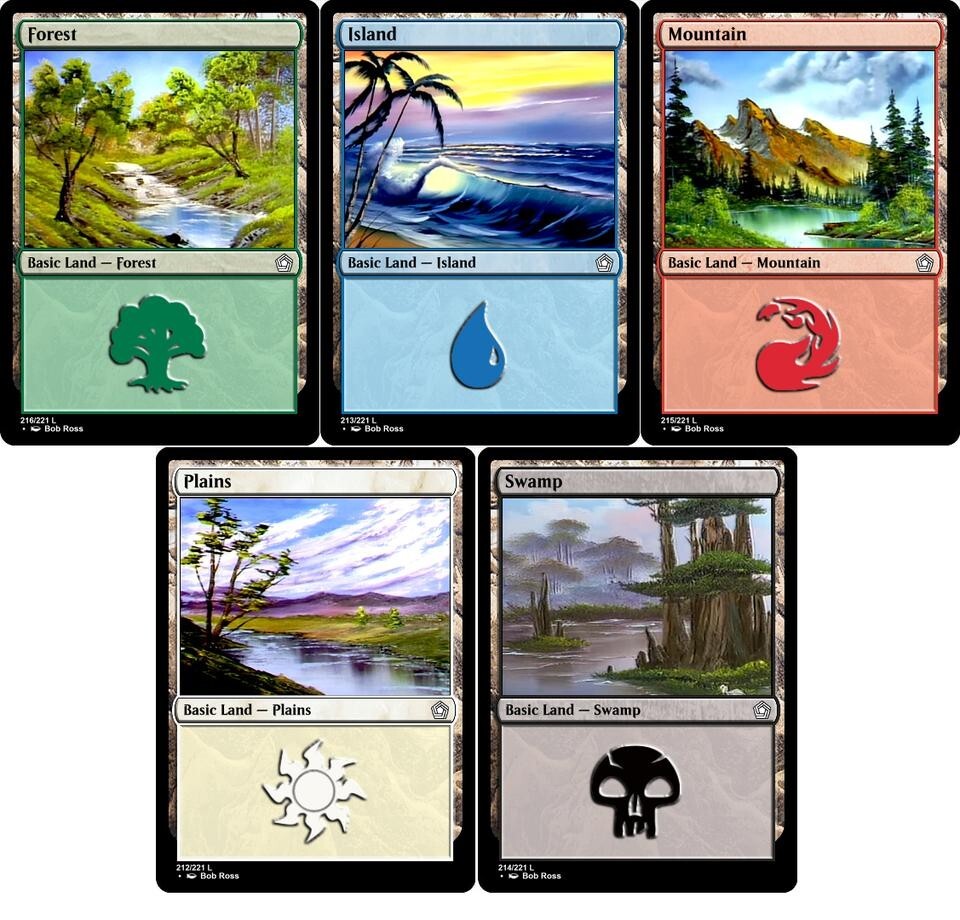
Mana is a resource which lands, as well as some other cards, can provide.
Mana is your main source of casting spells in Magic the Gathering.
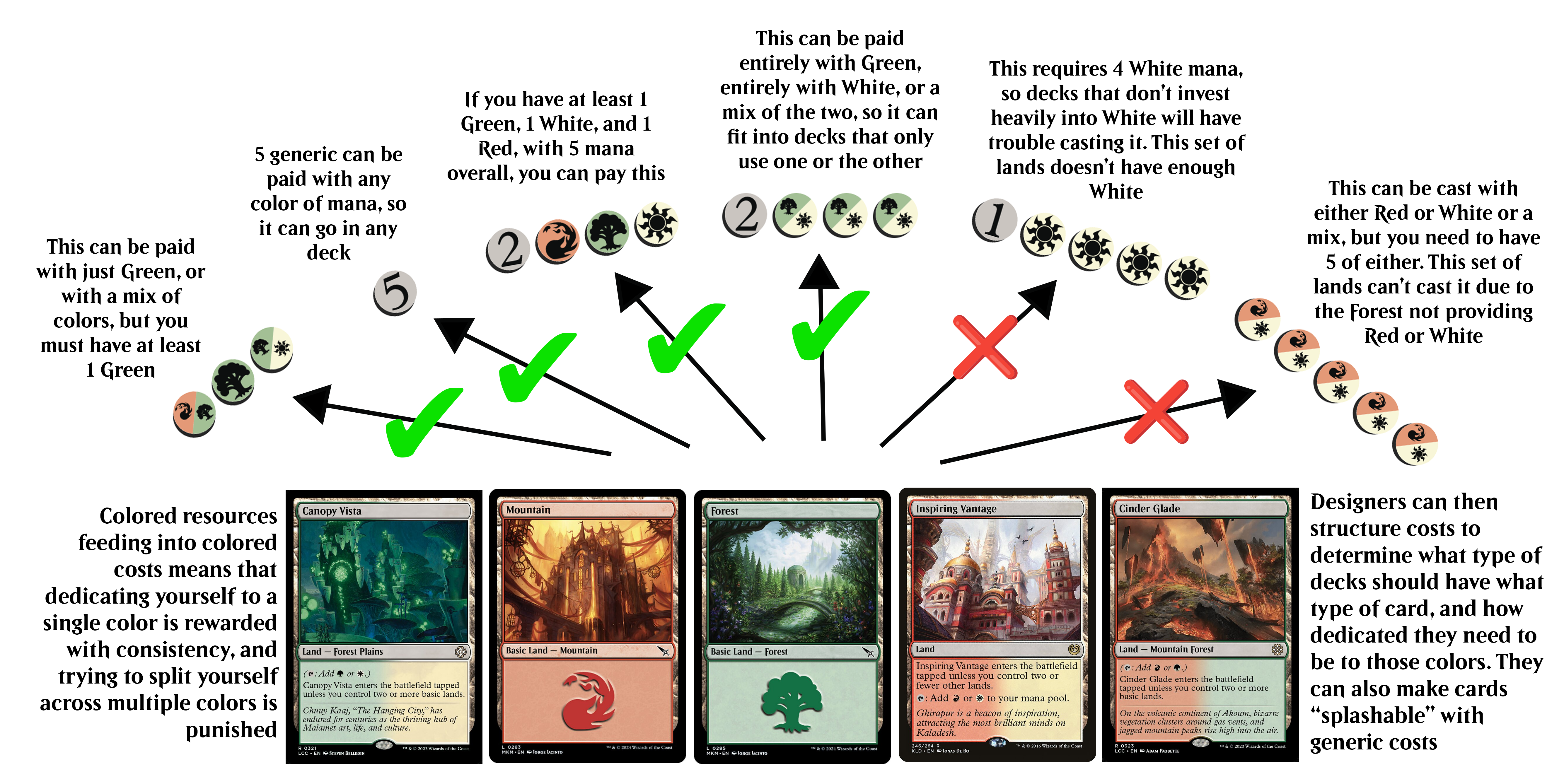
At the top right of any non-Land card, you will usually find a number and/or one or more colored symbols. This is the mana cost.
The colored symbols correspond to the type of colored mana which is required to cast the card, being one of the five Magic colors.
These colors are White, Blue, Black, Red, and Green.
If the card also has a number inside a gray circle in the mana cost, it means that card may be cast using any color of mana of that listed amount.
Spells
All nonland cards in your deck count as spells. There are two main types of spells; permanents and non-permanents.
Permanents are cards such as Creatures, Artifacts, or Enchantments, all cards which stay on the field after casting.
Non-Permanents include Instants and Sorceries, which resolve a certain effect as soon as you play them, then are discarded into your Graveyard.
Turn Steps
During your turn, there are many steps that are taken in a set order.
Untap: As soon as it becomes your turn, you start by untapping all tapped permanents you control. Most importantly, this includes lands.
Upkeep: Some cards have effects that happen at the beginning of your turn. All these effects happen during the Upkeep phase.
Draw: You draw a card from your deck.
First main phase: During this phase, you may now start to cast spells by tapping lands to pay their mana costs.
Combat phase: During this phase, you may attack your opponent with any creatures you control in order to reduce their life total.
Second main phase: Just like the first, you may cast any other spells you would like before ending your turn.
Endstep: Some cards have effects that happen at the end of your turn. All these effects happen during the Endstep phase.
Most spells can only be played during either of your main phases on your turn, unless they state otherwise.
However, Instant spells may be played at any step of the game, including on your opponent's turn.
By playing spells and attacking with creatures, you can lower your opponent's life total to 0, winning the game.
There are many more complex rules, many formats, and many unique ways to play the game.
By playing and experimenting with different formats and cards, no two games are ever the same.